Deck 1 · Cabin Guide

Find the Right Cabin for Your Cruise

From compact inside staterooms to expansive suites, your cabin shapes the rhythm of every sea day. This guide breaks down the categories, compares real specifications, and gives you the booking confidence to choose the room that suits your travel style and budget.

Cabin Categories Overview

Four Ways to Sleep at Sea

Cruise ship cabins range from compact inside staterooms to expansive suites. Understanding the core differences helps you match your accommodation to the way you actually travel.

Inside Cabins

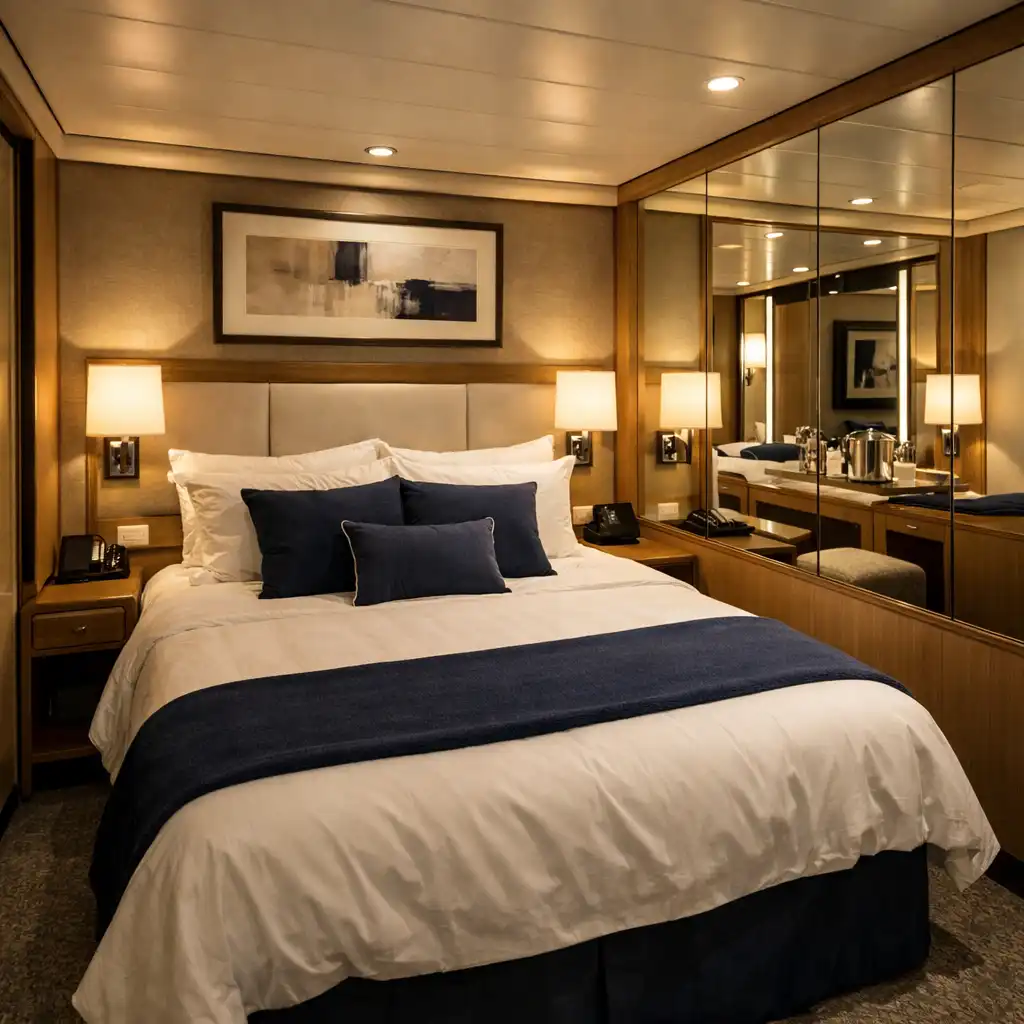
Compact, windowless cabins ideal for budget-conscious travellers who spend most of their time exploring the ship. Clever lighting and mirrors keep the space feeling open, while the lower fare leaves more room in your holiday budget for dining, shore excursions, and onboard experiences.

  • Typically 150–185 square feet.
  • No natural light; often use clever lighting and mirrors.
  • Best for solo travellers or those who only use the cabin to sleep.

Oceanview Cabins

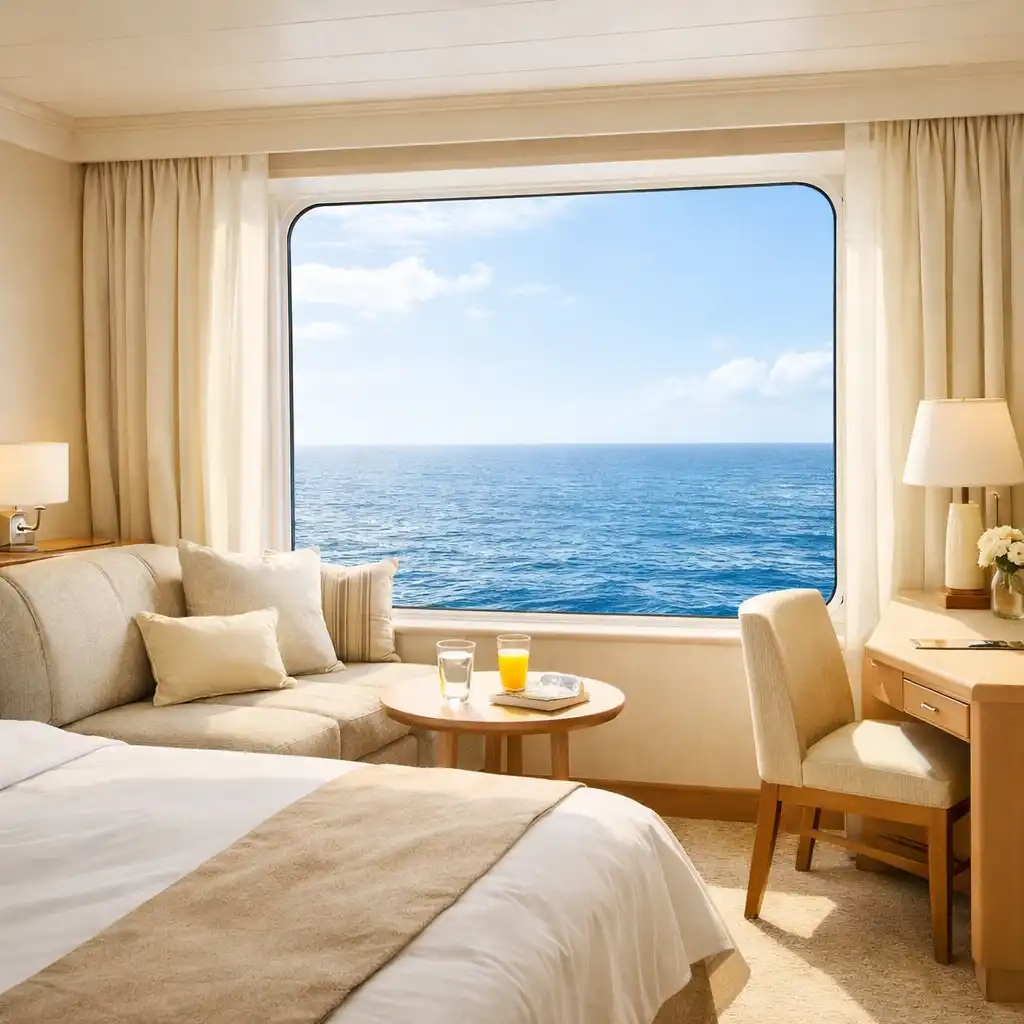
Cabins with a porthole or picture window offering natural light and ocean views without a private balcony. They are a sensible middle ground for travellers who want a brighter room and a connection to the sea, but do not need outdoor space of their own.

  • Slightly larger than inside cabins, around 180–220 square feet.
  • Window may be obstructed by lifeboats or ship structure.
  • A good middle-ground option for value and view.

Balcony Cabins

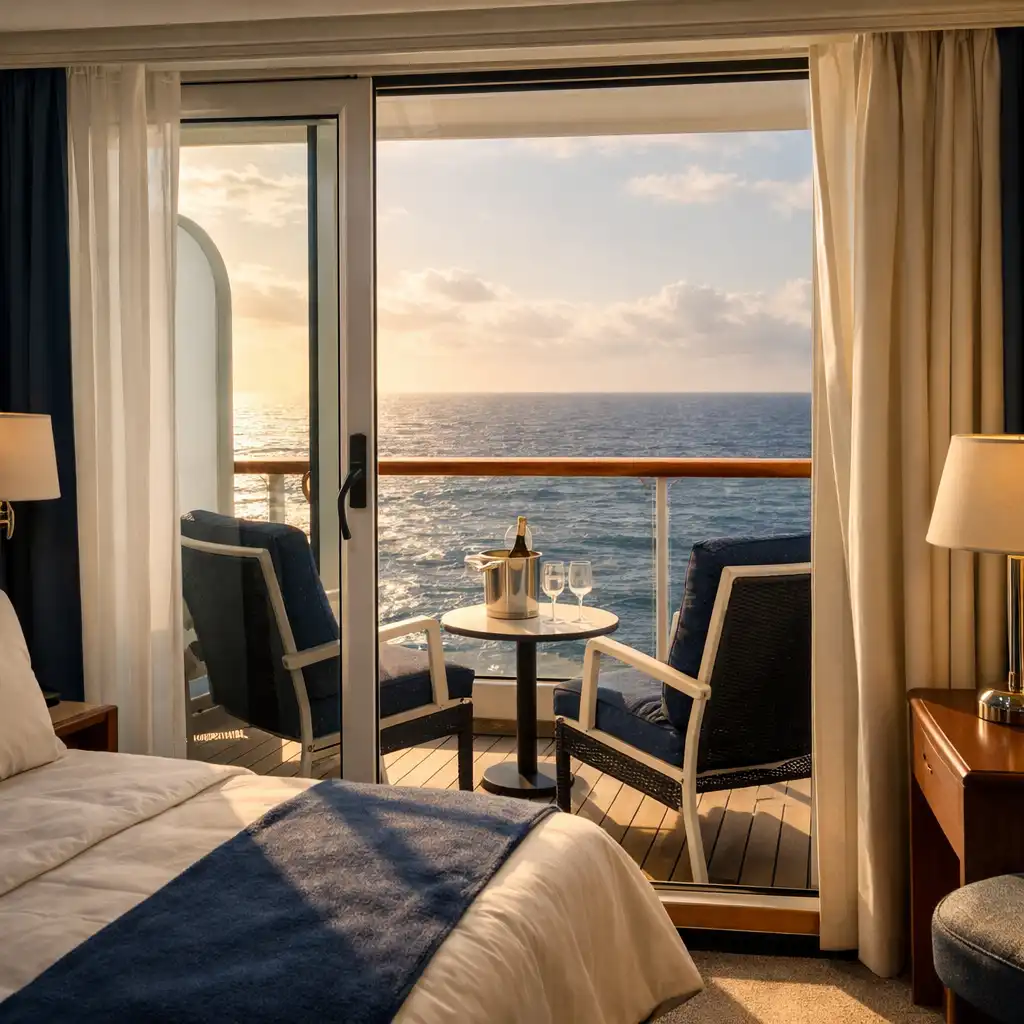
The most popular choice, featuring a private veranda for fresh air and personal outdoor space. A balcony changes the way you experience a cruise, giving you a quiet place for morning coffee, scenic arrivals, and late-night sea air without leaving your room.

  • Usually 200–250 square feet including balcony.
  • Balcony sizes vary; some are partially obstructed.
  • Great for scenic cruising and private relaxation.

Suites

Premium accommodations with separate living areas, enhanced amenities, and often exclusive access to suites-only venues. If you are celebrating a milestone or simply want more room to unwind, a suite turns your cabin into a private retreat at sea.

  • Can range from 300 to over 1,000 square feet.
  • May include butler service, priority boarding, and concierge.
  • Ideal for special occasions or travellers seeking luxury.

Cabin Comparison Table

Cabin Specs at a Glance

Use this quick reference to compare size, key features, and typical price positioning across the four main cabin types.

Cabin Type Size Range Key Features Typical Price Range
Inside 150–185 sq ft No window, compact layout, budget fare Budget
Oceanview 180–220 sq ft Window or porthole, natural light Mid-range
Balcony 200–250 sq ft Private veranda, outdoor seating Popular
Suite 300+ sq ft Separate living area, premium amenities Premium
Choosing the Right Cabin

Match Your Cabin to the Way You Cruise

Consider Your Budget

Determine how much you are willing to spend on accommodation, as cabin price can vary significantly. Inside cabins are the most affordable entry point, while suites sit at the premium end. Prices also fluctuate based on itinerary, ship, and season, so a flexible approach can unlock better value.

  • Inside cabins are most affordable; suites are premium.
  • Prices fluctuate based on itinerary, ship, and season.
  • Booking early or late can yield deals.

Think About Location

Cabin location affects motion, noise, and convenience. Midship lower decks are most stable; higher decks offer views but may feel more movement. Think about how close you want to be to the lifts, dining rooms, and the outdoor decks you will use most.

  • Forward cabins may experience more motion.
  • Aft cabins can have engine vibration.
  • Near elevators is convenient but can be noisy.

Assess Your Needs

Consider who is travelling, how much time you will spend in the cabin, and any accessibility requirements. Families may benefit from connecting cabins or suites, while solo travellers can often be comfortable in a smaller inside room.

  • Families may need connecting cabins or suites.
  • Solo travellers can opt for smaller inside cabins.
  • Accessible cabins are available on most ships.
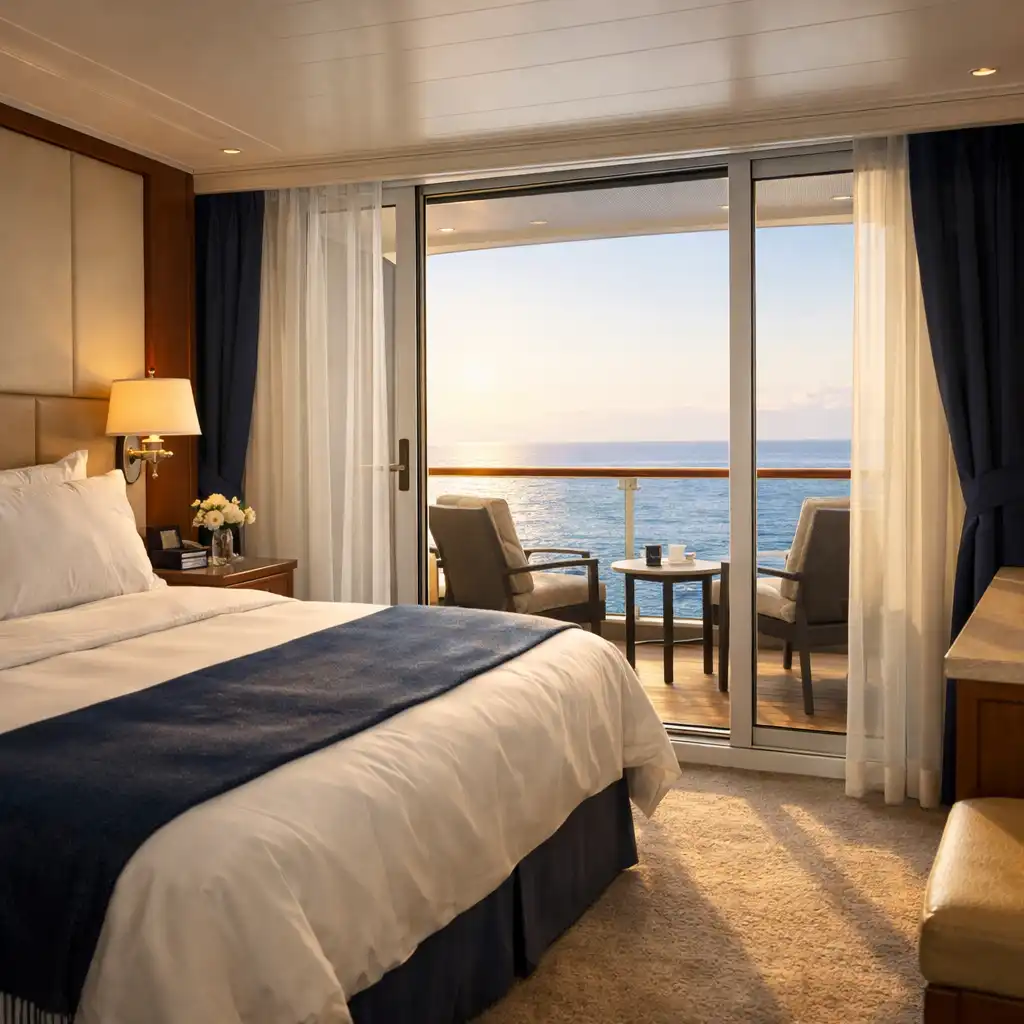
A luxurious cruise ship balcony cabin interior with a king bed, floor-to-ceiling glass door, and a private veranda overlooking the ocean
A balcony cabin interior with a private veranda and ocean view.
Insider Tips for Booking

Book Smarter, Not Harder

A little strategy can mean a better cabin, a lower fare, or both. These are the booking habits experienced cruisers use to secure the right room.

  1. Book Early or Late

    Booking early often secures the best selection and early-bird discounts, while last-minute deals can offer significant savings if you are flexible. Early booking is best for popular itineraries, while last-minute deals are common for off-peak sailings.

  2. Watch for Upgrades

    Cruise lines sometimes offer paid upgrades closer to sailing. Be ready to act quickly when an upgrade offer appears. Upgrade offers may come via email or when checking in, and the cost is usually less than booking the higher category initially.

  3. Consider Guarantee Cabins

    Booking a guarantee cabin means you pay a lower rate and are assigned a cabin in that category or higher, but you have no control over location. Best for flexible travellers, this can result in a better cabin than booked.

Pros and Cons of Cabin Types

Weigh the Trade-offs

Every cabin category has strengths and compromises. Use this balanced view to decide what matters most for your next sailing.

Inside Cabins

Pros

  • Most affordable
  • Cozy and quiet
  • Dark for sleeping

Cons

  • No natural light
  • Can feel cramped
  • Limited space

Oceanview Cabins

Pros

  • Natural light
  • Ocean view
  • More spacious than inside

Cons

  • Window may be obstructed
  • No balcony
  • View may be partial

Balcony Cabins

Pros

  • Private outdoor space
  • Fresh air
  • Great for scenic cruising

Cons

  • More expensive
  • Balcony can be small
  • Higher cost

Suites

Pros

  • Spacious
  • Premium amenities
  • Exclusive access

Cons

  • Significantly more expensive
  • High cost
  • May be unnecessary for some
Frequently Asked Questions

Cabin Questions, Answered

Quick answers to the questions Australian cruisers ask most before selecting a stateroom.

Noise levels vary by location. Cabins near elevators, stairs, or public venues may experience more noise. Midship cabins on lower decks are generally quieter. Consider cabin location when booking, and note that some ships have designated quiet zones.

Most cruise lines allow you to select a specific cabin at booking, subject to availability. Guarantee cabins do not allow selection. Specific cabin selection may incur a higher fare, while guarantee cabins are assigned later.

Yes, most ships have accessible cabins with wider doorways, roll-in showers, and other features. They must be booked in advance and require documentation. Contact the cruise line for specific requirements, as accessible cabins are limited.

A balcony cabin has a private veranda but a single room. A suite offers a separate living area, more space, and enhanced amenities like butler service. Suites are significantly larger and often include exclusive access to suites-only venues.